
How I Left Marketing to Launch a Workplace Therapy Dog Business
28 July 2026
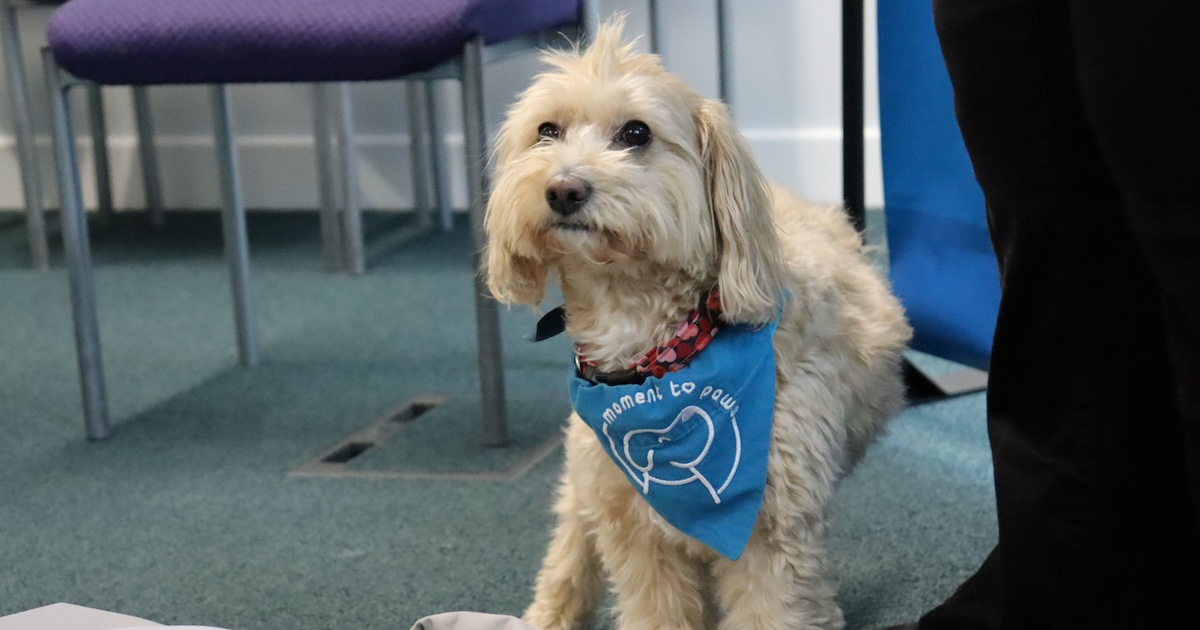
Working with therapy dogs is a huge responsibility. Our priority is keeping the dogs we work with safe, happy and healthy while providing a service which shares their innate ability to help people. A lot goes into this, which is why every dog we work with goes through a thorough assessment process, followed by a trial period.
One factor that we always consider is age. Here’s why.
We Love Puppies – Which Is Why We Don’t Work With Them
Whilst young puppies are cute and can’t fail to bring a smile to your face, they are still developing and learning, and their behaviour may be unpredictable.
Dogs go through two main ‘fear periods’ as they grow – one at around 8 to 11 weeks old and one around 6 to 18 months old. During these periods, puppies can become more sensitive and their resulting behaviour can vary widely. Some puppies may show ‘flight’ behaviour where they try to hide or cower. Others may show ‘fight’ behaviour, where they may growl or snap. Others may sail through these periods with no changes at all.
Fear periods are a completely normal phase for puppies to go through as they figure out the world and begin to better understand what they should avoid for survival purposes. Their experiences at this age can have long-lasting effects so it’s not fair to put them into any situation that could cause stress.
There is also an imprinting phenomenon known as ‘single-event learning’ in which one overwhelming or scary situation can trigger an adverse fear response for the rest of their life. Puppies are more vulnerable to this than adult dogs.
In addition, we know that small puppies need around 18 to 20 hours of uninterrupted sleep a day, as well as a solid routine. They are simply too young to cope with our events!
The Hygiene Factor
Understandably, puppies are still learning where it’s appropriate to go to the toilet. We don’t want you to have to worry about this, so all our dogs are toilet trained to avoid any little ‘accidents’ (we do of course bring cleaning materials with us just in case!).
In addition, many dogs will do an ‘excitable’ or ‘nervous’ wee right through adolescence. Naturally, this is something we check as part of our assessment process.
The Consent Test
This is a big one for us. There is a huge difference between a dog tolerating affection and a dog actively desiring it.
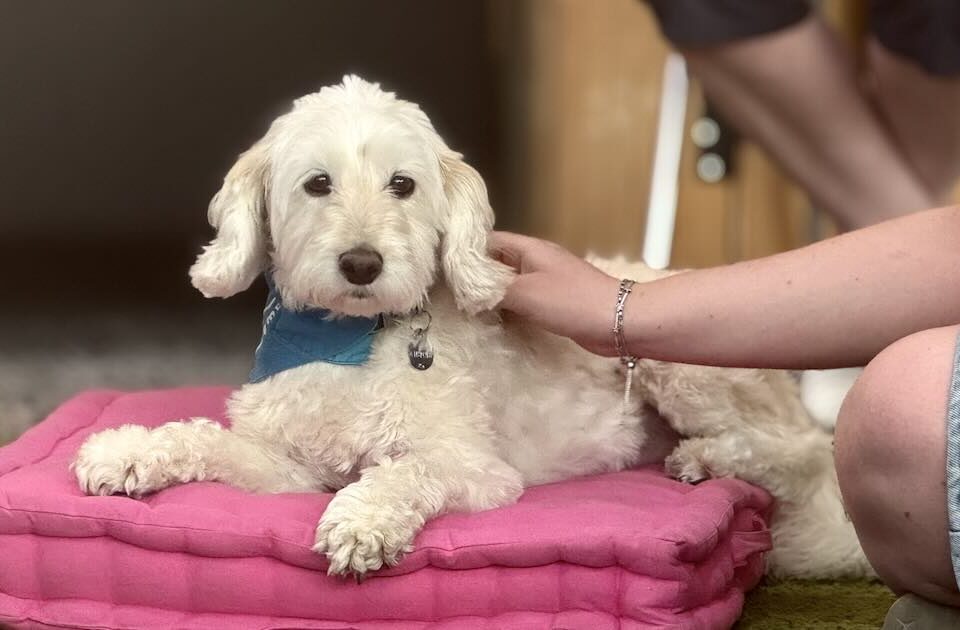
We use a very simple test here – we put a hand out, stroke the dog for a few moments, and then stop.
If the dog moves towards us to seek further attention, we know they are choosing to interact. If they stay still or even step away, we know they may not be comfortable and we respect their space. We only select dogs who truly crave human company, as that’s what Moment to Paws is all about.
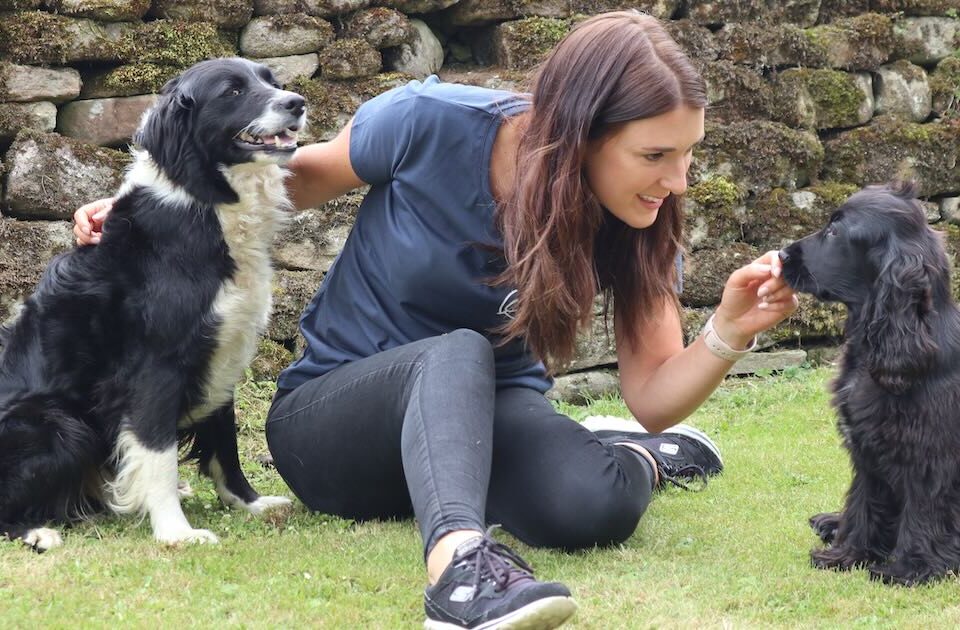
Even a dog who laps up attention may need a break (Mabel and Fern, two of the Cocker Spaniels on our team may disagree!). And as adult dogs, occasionally our dogs will take themselves off for a little rest… even if it’s only a couple of minutes before they want back in on the cuddles!
Puppies aren’t given the same agency, as they might be passed around or placed on someone’s knee. They’re not yet able to choose whether they want the affection or not. And if you take away a dog’s choice, they can either learn to shut down, or they can learn to use other more forceful methods to get the space they require, which we definitely don’t want!
Avoiding Over-Arousal
We celebrate and encourage all kinds of personalities on our team – some are beautifully serene souls who contentedly lie down through much of the events, while others bring a bit more enthusiastic energy to the room.
However, the key is that they can be calm and listen to cues. Puppies and younger dogs are still learning how to control their emotions - anyone who has lived with a puppy or adolescent dog will know how quickly they can go from zero to a hundred! When they become over-stimulated, it can be very hard for them to settle themselves. This is a skill which is both learned and comes with age (as well as being linked to genetics, breed, diet and more but we’ll save that for another post!).
Puppy Biting Isn’t for the Faint Hearted
If you’ve ever been the victim of a puppy bite, you’ll know how sharp those teeth are! Biting is a way in which puppies explore the world, as well as helping to soothe any teething pain. Puppies don’t yet know that biting hurts, it’s something else they need to learn.
Our dogs are assessed for mouthing and aggression. Naturally we wouldn’t work with a dog if they had ever shown signs of either.
You can hopefully now see that puppies aren‘t the best fit for corporate therapy – not only could it be an unpredictable experience for everyone, their welfare has to come first. That’s why we only work with dogs that are at least 18 months old.
We hope you’ll get the chance to meet some of our amazing team in your organisation soon!